
Procedures
At West Des Moines OB/GYN Associates, our physicians and staff always put your best interest first. Whether your treatment plan calls for a minor in-office procedure or a more involved surgery, we’ll work with you to determine the most appropriate approach for your condition. Below is an overview of the gynecologic procedures we perform.
Find the Right Procedure for You
Use the links below to jump to procedures grouped by what you’re addressing. If you’re not sure which option fits your situation, our team is here to help you decide.
For Heavy or Abnormal Bleeding
For Pelvic Organ Prolapse and Urinary Incontinence
For Permanent Birth Control
For Abnormal Pap Smear or Cervical Concerns
For Menopause-Related Vaginal Symptoms
Minimally Invasive Hysterectomy
A hysterectomy is the surgical removal of the uterus. We offer several minimally invasive approaches so that you can recover faster and return to daily life with less downtime. Before scheduling, we’ll walk you through what to expect and answer any questions you have. For more on preparing for this surgery, see What You Should Know Before Having a Hysterectomy.
Laparoscopic Assisted Vaginal Hysterectomy (LAVH)
LAVH involves laparoscopic detachment of the upper structures and ligaments, which allows the surgeon to detach the uterus and/or tubes and ovaries and remove them vaginally.
Total Laparoscopic Hysterectomy (TLH)
TLH is the laparoscopic removal of the uterus and cervix, with the vagina closed laparoscopically.
Laparoscopic Supracervical Hysterectomy (LSH)
LSH removes the body of the uterus using the laparoscope while leaving the cervix intact. It’s commonly performed in combination with a sacrocolpopexy procedure.
Robotic Total Laparoscopic Hysterectomy
Robotic TLH uses a breakthrough surgical platform to remove the uterus and/or tubes and ovaries. Da Vinci technology allows the surgeon to operate in 3D with improved precision, dexterity, and control. We also offer single-site robotic-assisted hysterectomies for appropriate patients.
Endometrial Ablation
Endometrial ablation is the surgical destruction of the endometrial uterine layer, used to treat abnormal uterine bleeding caused by benign conditions. Ablation may be performed using heat, freezing, laser, or electrosurgical methods. Pre-procedure testing can include hysteroscopy, ultrasound, and endometrial biopsy. Thermal ablation can be done comfortably in our office with a paracervical block.
Learn more: Endometrial Ablation for Heavy Periods
Colposcopy
If your pap smear comes back abnormal, your provider may recommend a colposcopy. This in-office exam uses a magnifying device to take a closer look at the cervix. Cervical biopsies may be taken during the exam to check for cervical intraepithelial neoplasia (CIN). Depending on your biopsy results, a LEEP procedure may be the next step.
Loop Electrosurgical Excision Procedure (LEEP)
LEEP uses a low-voltage electrical current to remove abnormal tissues of the cervix that have been identified through colposcopy and/or cervical biopsy. It’s performed in the office with a local anesthetic cervical block, so most patients return home shortly after.
Pelvic Organ Prolapse Surgeries
Pelvic organ prolapse covers a range of conditions including cystocele, rectocele, enterocele, uterine prolapse, and vaginal vault prolapse. Repairs may be vaginal, abdominal, or laparoscopic, and can involve mesh, suspension from intact ligaments, or repair of displaced or damaged tissue.
Uterosacral Suspension
Following a hysterectomy, the top of the vagina is stitched to the uterosacral ligaments to provide apical support. This can be performed vaginally, abdominally, or laparoscopically.
Sacrocolpopexy
After a total or supracervical hysterectomy, a synthetic graft is attached to the vagina or the remaining cervix and anchored just above the tailbone. This procedure is performed using the da Vinci Robot or abdominally.
Sacrospinous Suspensions
The top of the vagina is stitched to the sacrospinous ligaments, either bilaterally or unilaterally. It’s performed vaginally to add apical support.
Mid-urethral Sling (Incontinence Surgery)
A mid-urethral sling provides a ribbon of support under the urethra, keeping it from dropping during exercise, coughing, or other forms of stress. That support prevents or reduces urinary leakage. Placement may be done via a transobturator or retropubic approach.
Dilation & Curettage (D&C)
A D&C removes tissue from the inside of the uterus, often for diagnostic purposes when evaluating abnormal bleeding or other concerns. Your provider will discuss the reason for the procedure and what to expect during recovery.
Vaginal Biopsy
A vaginal biopsy involves removing a small tissue sample for examination under a microscope. It’s a straightforward way to evaluate suspicious areas and guide any next steps in care.
Tubal Ligation (Laparoscopy)
During a tubal ligation, the fallopian tubes are cut or blocked to permanently prevent pregnancy. With the laparoscopic approach, a laparoscope is inserted through a small incision in or near the navel to close off or remove the fallopian tubes. For recovery guidance, visit Tubal Ligation Aftercare.
Laser Vaginal Rejuvenation Treatment
For patients dealing with vaginal dryness, discomfort, or other symptoms related to hormonal changes, we offer non-hormonal laser treatment as an option.
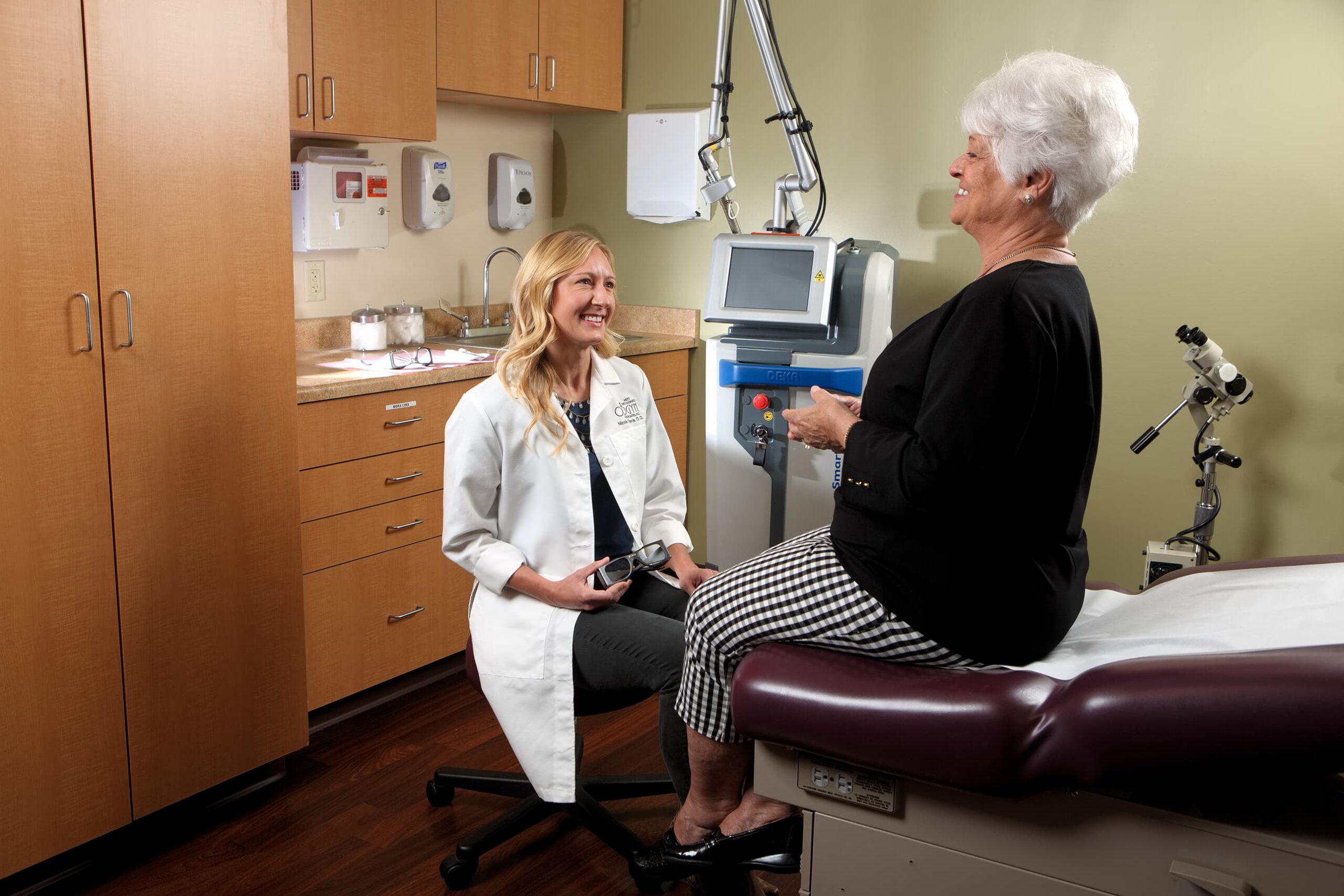
MonaLisa Touch
MonaLisa Touch is a fractional CO2 laser therapy designed to treat symptoms associated with vaginal atrophy, often experienced during and after menopause. Many patients notice relief after a short series of in-office sessions, with no downtime needed. Learn more about MonaLisa Touch.
Contact Us
Need to get in touch before your visit? Use the messaging feature located in the bottom right corner of the page to quickly connect with West Des Moines OBGYN Associates, or give us a call at (515) 223-5466.